
A travel guide from Away Retreats, with tips from our trip leaders. Updated October 2026.
Traveling to Oaxaca is a trip for the senses: markets stacked with chiles and chocolate, courtyards wrapped in bougainvillea, mezcal made the slow way, and some of the most beautiful traditions in Mexico. This guide answers the questions travelers most often ask before a first trip, so you can spend less time planning and more time wandering.
Oaxaca at a glance
Best time to go: Late October through April (dry season)
Language: Spanish, plus many Indigenous languages
Currency: Mexican peso
Fly into: Oaxaca International Airport (OAX)
Elevation: About 5,100 feet
When Is the Best Time to Visit Oaxaca?
For most travelers, the best time to visit Oaxaca is late October through April, during the dry season. Days are warm and sunny, nights are cool, and the city is full of festivals, with Día de los Muertos in late October and early November as the highlight.
The rainy season runs roughly from June through September. Rain usually comes as afternoon storms rather than all-day downpours, mornings are often clear, and the valleys turn green. It is quieter and often less expensive, as long as you plan outdoor time for the mornings.
Because Oaxaca City sits at about 5,100 feet, it rarely feels as hot as Mexico’s coast. December and January bring the coolest nights of the year, and April and May tend to be the warmest.
Pro tip from our team
Book early for Día de los Muertos. Hotels in the historic center fill months ahead for late October and early November, and prices climb as the dates get closer. If you’d rather have the city mostly to yourself, February and March bring warm, dry days and far fewer visitors.

Is Oaxaca Safe for Travelers?
Oaxaca City is one of Mexico’s most visited cultural destinations, and the historic center is busy, walkable, and welcoming. The U.S. State Department rates each Mexican state separately, and Oaxaca state has been at Level 2, “Exercise Increased Caution,” the same level as many popular destinations in Europe.
Advisories change, so check the current Mexico travel advisory before you go. Day to day, use the same common sense you would in any city: keep valuables out of sight in crowds, use registered taxis or arranged transportation at night, and steer clear of political demonstrations, which happen in the city center from time to time.
How Do I Get to Oaxaca?
Fly into Oaxaca International Airport (OAX), a short drive south of the city center. A handful of U.S. cities have nonstop flights, including Houston and Dallas, and there are many daily flights from Mexico City, which is the easiest connection from almost anywhere. Routes change by season, so check current schedules when you book.
From the airport, use an authorized airport taxi or arranged transportation rather than flagging a ride outside. On an Away retreat, airport pickup and drop-off are included, so you can step off the plane and let someone else handle the rest.
Do I Need to Speak Spanish?
No, but a little goes a long way. Spanish is the main language, and many Indigenous languages, including Zapotec and Mixtec, are still spoken in the region, especially in the villages outside the city. In hotels, restaurants, and shops in the historic center, you will usually find someone who speaks some English. In markets and smaller towns, a few words of Spanish and a smile do most of the work.
A few phrases worth learning: buenos días (good morning), por favor (please), gracias (thank you), ¿cuánto cuesta? (how much is it?), and la cuenta, por favor (the check, please).
Free download
The Oaxaca Packing Checklist
Everything we pack for Oaxaca, on one printable page. We’ll send it to your inbox, along with Lindsay’s weekly letter, Sundays from Somewhere.
What Should I Pack for Oaxaca?
Pack for warm days and cool nights. Because of the elevation, temperatures can swing a lot between the afternoon and the evening, especially in late fall and winter.
- Layers for cooler mornings and evenings, like a light sweater or jacket
- Comfortable walking shoes for cobblestone streets and market days
- Sun protection: a hat, sunglasses, and sunscreen
- A light rain jacket if you’re traveling between June and September
- Modest, darker clothing if you’ll visit a cemetery during Día de los Muertos
- Some cash in pesos for markets and small shops, which often don’t take cards
What Is Día de los Muertos Like in Oaxaca?
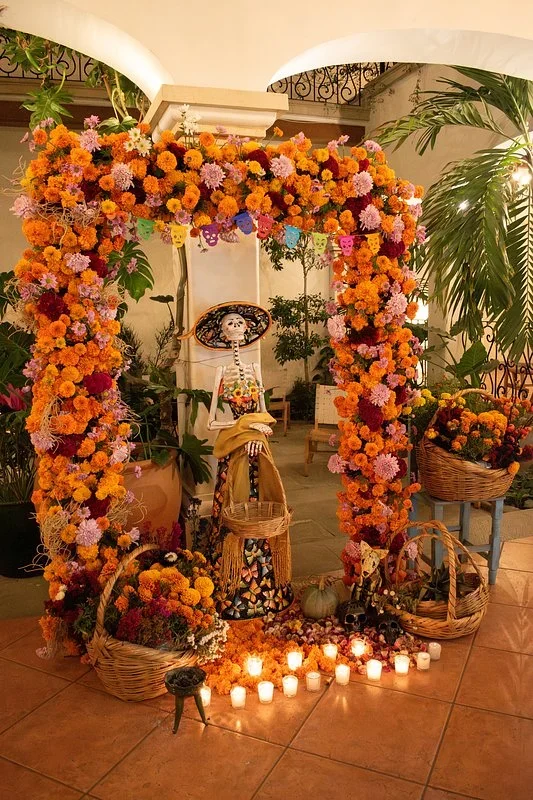
Día de los Muertos is when families welcome the spirits of loved ones home. In Oaxaca, celebrations build through late October and center on November 1 and 2. Families build ofrendas (altars) with photos, marigolds, candles, and the favorite foods and drinks of those they’re remembering, and the streets fill with sand tapestries, parades, and music. Markets sell pan de muerto, sugar skulls, and armfuls of marigolds, whose color and scent are said to guide the spirits home.
The candlelit cemetery vigils are the heart of it, and they are real family gatherings, not performances. A few ways to be a good guest:
- Always ask before photographing people or family altars, and skip the flash.
- Keep your voice low, stay on the paths, and never step on a grave.
- Skip costumes and face paint in cemeteries. If you paint your face for a parade, wash it off first.
- A small offering, like a candle or a few marigolds, is a kind gesture if a family invites you in.
Pro tip from our team
Go with someone who belongs there. A local guide knows which cemeteries welcome visitors and when, and being invited into a family’s home changes everything: you sit at the altar with them and hear the stories behind the photos, instead of watching from the edge of the crowd. That’s why our Día de los Muertos retreat spends time with host families in two villages outside the city
What Should I Eat in Oaxaca?
Oaxaca is one of Mexico’s great food regions, and much of the best of it is in the markets. A few things not to miss:
- Mole: Oaxaca is known as the land of seven moles, from rich, dark mole negro to bright mole amarillo.
- Tlayudas: a large, crisp tortilla topped with beans, Oaxacan cheese, and meat or vegetables.
- Hot chocolate: often ground with cinnamon and sugar and served with sweet bread.
- Mezcal: Oaxaca produces most of the world’s mezcal. Sip it slowly, the way locals do.
- Chapulines: toasted grasshoppers with lime and chile, if you’re feeling brave.
Drink bottled or filtered water rather than tap water, and you’ll be set to eat your way through the city.

Go with us
Experience Oaxaca with Away
Small groups, everything handled, and everything optional.
October 30 to November 3, 2027
Mexico: Día de los Muertos in Oaxaca
Altars, sand tapestries, a candlelight cemetery vigil, and time with host families in two villages outside the city.
November 5 to 10, 2027
Mexico: Culinary Immersion in Oaxaca
Market tours, a Zapotec cooking experience, moles and mezcal, and a swim at Hierve el Agua, just after Día de los Muertos.
The weekly letter
Get Sundays from Somewhere
Lindsay’s weekly letter for people who love to travel thoughtfully.

Written by
Lindsay Eldridge
Lindsay Eldridge is the founder of Away Retreats, a small-group travel retreat company creating experiences centered around connection, curiosity and meaningful time away. She has spent more than two decades planning and leading group travel experiences.

The Away way
Travel without pressure.
Everything is optional. Always.
5% of profits support local community initiatives in the locations we visit.
Find your kind of retreat
Six ways to travel with us, all with small groups, a menu of choices, and every detail handled.